
Some botanical ingredients in herbal hemorrhoid creams have modest support, mainly witch hazel, which is an FDA-recognized astringent for temporary relief of itching and irritation. Others, like horse chestnut, calendula, and aloe, rest mostly on traditional use, small studies, or animal research. Herbal creams may soothe symptoms for some people, but none have been shown to shrink or cure hemorrhoids.
Herbal Hemorrhoid Cream: Do Botanical Ingredients Actually Help?
An herbal hemorrhoids cream promises gentle, plant-based relief, and for many people that sounds better than a tube full of chemical names. The honest answer is that a few botanicals have reasonable support for soothing symptoms, while most of the label claims run well ahead of the evidence.
This guide looks at the individual ingredients you will see on herbal creams, how these products are regulated, and how to read their labels. If you want the bigger picture on home and natural options in general, see our earlier article, Natural Hemorrhoid Cream: What Actually Works. Here we stay focused on the herbs themselves and what a customer at South Fork Pharmacy in Moorefield should know before buying one.
What Counts As An Herbal Hemorrhoid Cream
There is no official definition. In practice, an herbal hemorrhoid cream is any ointment, cream, or balm marketed for hemorrhoid symptoms whose main selling point is one or more plant extracts. Some are sold as OTC drugs with a Drug Facts label. Others are sold as cosmetics or “natural skin care” with a simple ingredient list and no drug claims printed on the box, even if the website says otherwise.
The ingredients show up again and again. Witch hazel is the most common, often listed as Hamamelis virginiana. Aloe vera appears in many products for its soothing feel. Horse chestnut, sometimes listed as Aesculus hippocastanum, is promoted for vein health. Calendula, from the marigold family, is used for skin irritation. You may also see chamomile, tea tree oil, butcher’s broom, comfrey, peony, rhatany, or blends with names that sound traditional but do not identify a specific plant part or amount.
Many of these creams also contain a base of oils, waxes, or butters such as shea, beeswax, coconut oil, or olive oil. Those bases have a real effect of their own: they coat and protect irritated skin, which can ease friction and burning. When someone says an herbal cream helped, it is often hard to tell whether the herb or the greasy, protective base deserves the credit.
That distinction matters because standard OTC hemorrhoid ointments use the same protective approach with ingredients like petrolatum and mineral oil, which have well-documented protectant effects. A plain protectant ointment may give you much of the same comfort at a lower price.
What The Evidence Shows For Each Ingredient
Witch hazel has the strongest standing. The FDA’s OTC monograph for anorectal products recognizes witch hazel as an astringent at concentrations of 10 to 50 percent, for temporary relief of itching, burning, and irritation. Astringents tighten and dry the surface of the skin slightly, which can make it feel less raw. The effect is real but modest and short-lived. Witch hazel does not reduce the size of a hemorrhoid.
Horse chestnut has some evidence when taken by mouth for chronic venous insufficiency in the legs, and a few small studies have looked at oral products for hemorrhoid symptoms. Evidence for horse chestnut applied to the skin for hemorrhoids is thin, and the most-cited study comparing herbal hemorrhoid creams was done in rats, not people. That makes it an interesting lead, not a proven treatment.
Aloe vera has a long history of soothing minor skin irritation, and some people find it cooling. Clinical evidence for aloe on hemorrhoids specifically is limited to small studies, mostly in combination products, which makes it hard to isolate aloe’s effect. Calendula has traditional use and some lab and small clinical studies for wound healing and skin inflammation, but little direct research for hemorrhoids. Chamomile, peony, rhatany, and butcher’s broom fall into the same category: traditional use, plausible reasoning, and little high-quality human data for this purpose.
Tea tree oil deserves a caution. It has antimicrobial properties in the lab, but it is a common cause of allergic skin reactions, and the skin around the anus is especially sensitive. Comfrey contains compounds that can harm the liver when taken internally, and it should not be used on broken skin. In South Fork Pharmacy’s experience, the safest way to think about herbal ingredients is this: witch hazel has reasonable support for symptom relief, and the rest are mostly unproven for hemorrhoids, ranging from probably harmless to occasionally irritating.
Herbal Versus FDA-Monograph OTC Creams
Standard OTC hemorrhoid products in the United States are regulated under an FDA monograph. The monograph lists approved active ingredients, the allowed strengths, the claims a company may make, and the warnings it must print. That is why a Preparation H box or a store brand box has a Drug Facts panel that looks the same from product to product.
The approved categories include protectants such as petrolatum, mineral oil, and zinc oxide, local anesthetics such as lidocaine and pramoxine, vasoconstrictors such as phenylephrine, astringents such as witch hazel, and, in separate rules, low-strength hydrocortisone for itching. Each of these has been reviewed for its ability to relieve symptoms at the listed strength. None is approved to cure hemorrhoids, and the labels are not allowed to say so.
Many herbal creams do not go through that framework at all. If a product contains no monograph active ingredient and makes no drug claims on its label, it may be sold as a cosmetic. Cosmetics do not need FDA approval before sale, and the FDA does not review them for effectiveness. Some herbal products are sold as homeopathic drugs, which follow a different set of rules and are not evaluated for effectiveness in the way monograph drugs are.
The practical difference for you is predictability. With a monograph product, you know exactly what the active ingredient is, how strong it is, and what warnings apply. With many herbal products, you know the plant names but often not how much of each is in the jar, whether the amount matches what was studied, or how consistent it is from batch to batch.
How To Read An Herbal Product Label
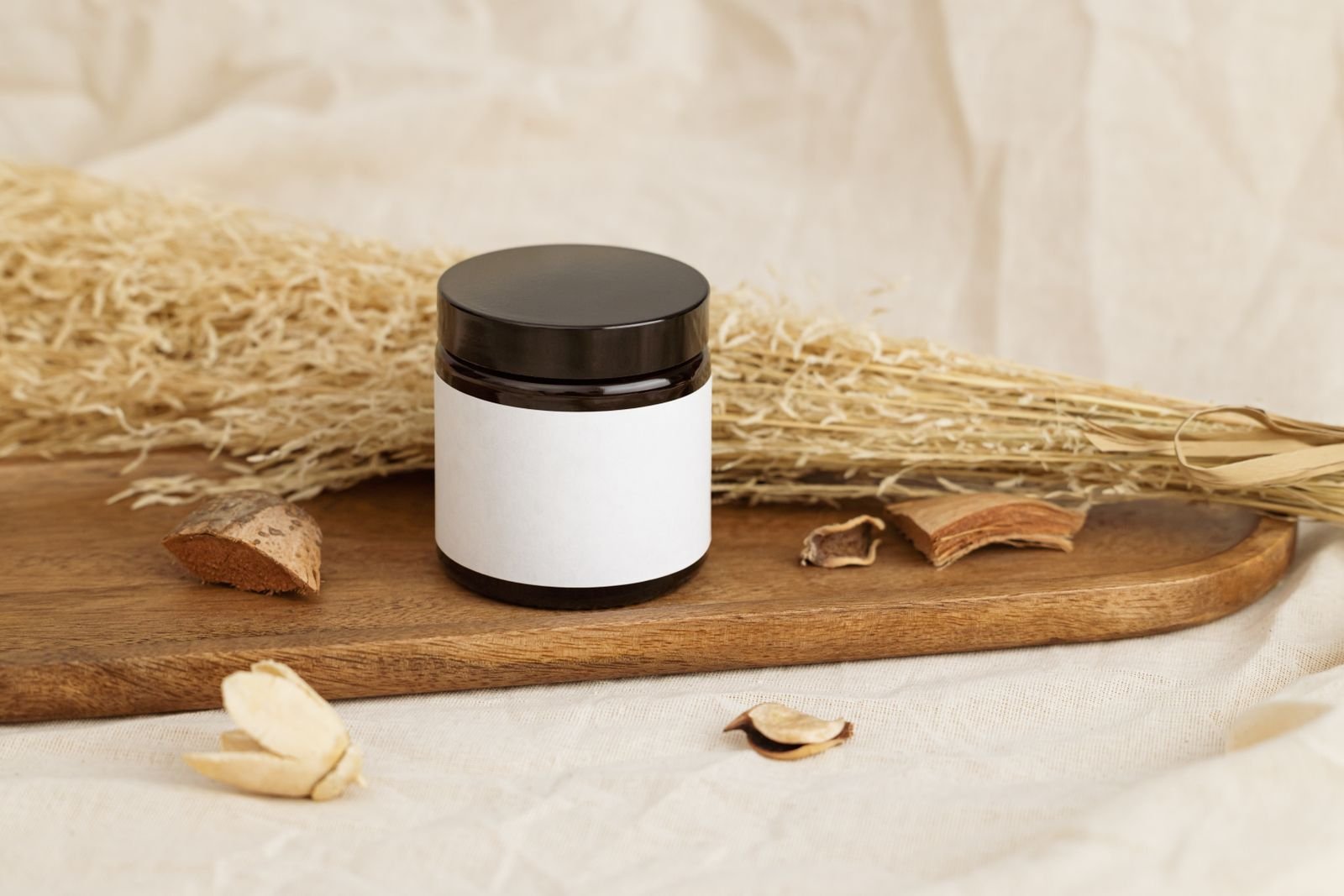
Most articles on herbal hemorrhoid creams list the herbs and stop. What they rarely explain is how to tell what kind of product you are actually holding. Start by looking for a Drug Facts panel. If there is one, the product is being sold as an OTC drug, and the panel will name the active ingredient, its strength, its uses, and its warnings. Witch hazel products often fall into this group.
If there is no Drug Facts panel, look for an ingredient list in descending order of amount, which is how cosmetics are labeled. Notice where the herbs fall. If water, oils, and waxes come first and the plant extracts appear near the end, the herbs are likely present in small amounts. A Supplement Facts panel means the product is a dietary supplement meant to be swallowed, not applied, so it should not be used as a cream at all.
Watch for the words “homeopathic” and for dilution codes such as “6X” or “30C.” These indicate homeopathic preparations, in which the original substance is diluted, often to a point where little or none remains. Also watch for marketing words that sound medical but do not mean anything regulated, such as “clinically inspired,” “doctor formulated,” or “shrinks fast.” A product sold as a cosmetic should not claim to treat hemorrhoids, so a box that makes strong treatment claims without a Drug Facts panel is a red flag.
Finally, check for a lot number, an expiration date, and a United States contact address or phone number. Products bought from overseas sellers online sometimes lack all three, and some imported “herbal” hemorrhoid creams have been found to contain undeclared steroids or other drugs. If you cannot tell what is in it or who made it, that is reason enough to leave it on the shelf.
Allergy And Skin Reaction Risks
“Natural” does not mean free of allergy risk. Plant extracts are among the more common causes of contact dermatitis, an itchy, red rash from skin contact. Calendula and chamomile belong to the daisy family, so people allergic to ragweed, daisies, or marigolds may react to them. Tea tree oil, fragrance blends, and essential oils such as lavender or peppermint are frequent irritants.
The skin around the anus is thin, often moist, and already inflamed during a flare, which makes reactions more likely. An allergic reaction can look a lot like the itching and burning you were trying to treat, so people sometimes apply more of the product and make the problem worse without realizing the cream is the cause.
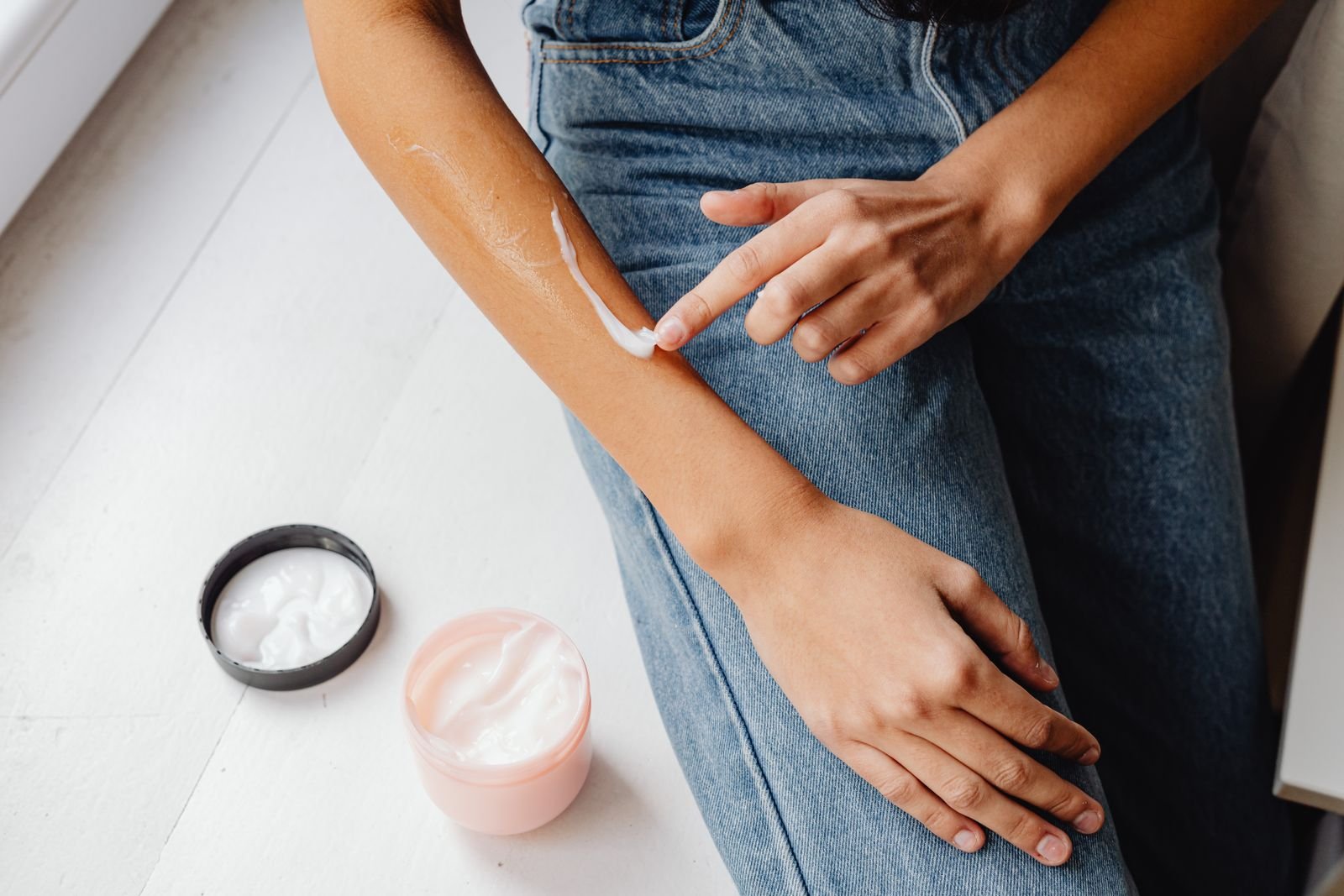
If you want to try an herbal cream, patch test it first. Apply a small amount to the inside of your forearm and leave it for a day. If you see redness, itching, or bumps, do not use it on the anal area. Choose fragrance-free products when you can, and stop using any product that causes new burning, swelling, or a rash.
Use extra caution if you are pregnant or breastfeeding, have sensitive skin or eczema, or are buying for an older adult with fragile skin. Some herbal products contain alcohol, which can sting on raw skin. A pharmacist can look at the ingredient list and point out any known irritants before you spend money on it.
When To Stop Self-Treating And Call A Doctor
Whether you use an herbal cream or a standard one, the same red flags apply. Call your doctor if bleeding is heavy or keeps returning, if you see no improvement within about seven days, or if pain is severe. A sudden, very painful lump may be a clotted hemorrhoid, and a doctor may be able to help in ways a cream cannot.
Changes in bowel habits that last more than a few days, such as new constipation, diarrhea, or narrower stools, deserve a check. Dark, maroon, or black stool is not typical of hemorrhoids and should be looked at promptly. If bleeding comes with dizziness, weakness, or a racing heart, seek care the same day.
It is also wise to stop and ask for help if you have been using an herbal product for a week or more with no clear benefit. Waiting longer on an unproven product delays both better symptom relief and a proper diagnosis. Our pharmacy services team can help you sort through the options, and our medication information library covers many of the standard OTC products in detail.
Considering an herbal hemorrhoid cream? Bring the product, or a photo of its label, to South Fork Pharmacy at 732 N Main St in Moorefield, and a pharmacist will compare it with label-backed OTC options so you can decide what is worth your money.
Frequently Asked Questions
Do herbal hemorrhoid creams actually shrink hemorrhoids?
No herbal cream has been shown to shrink or cure hemorrhoids. Some, especially those with witch hazel, may temporarily ease itching and irritation while the hemorrhoid settles on its own.
Is an herbal cream safer than Preparation H?
Not necessarily. Plant extracts can cause allergic reactions, and some herbal products are not reviewed by the FDA for effectiveness, while standard OTC creams have known ingredients, strengths, and warnings.
Is witch hazel considered herbal?
Witch hazel comes from a plant, but it is also an FDA-recognized astringent for hemorrhoid relief at 10 to 50 percent. That makes it the best-supported botanical ingredient for this purpose.
Can I use horse chestnut cream for hemorrhoids?
Evidence for horse chestnut applied to the skin for hemorrhoids is limited, and much of it comes from animal studies. If you want to try it, patch test first and talk to a pharmacist, especially if you take blood thinners.
Why does my herbal cream burn?
Burning can come from alcohol, essential oils, or an allergic reaction to one of the plant extracts. Stop using it, rinse the area gently, and ask a pharmacist at South Fork Pharmacy to look at the ingredient list with you.
Are imported herbal hemorrhoid creams okay to use?
Be cautious. Some imported products lack clear labeling, and some have been found to contain undeclared drugs, so choose products with a clear ingredient list and a United States contact.
Disclaimer: The information in this article is general information for educational purposes only and is not a substitute for individualized medical advice, diagnosis, or treatment from a pharmacist or doctor. Product formulations vary, so always follow the label on your package. If you think you may be experiencing a medical emergency, call 911 immediately. South Fork Pharmacy, Moorefield, West Virginia.