
Quick Answer: Yes, for both, but to different degrees. For a wrist sprain, bracing and immobilization is standard, well-established conservative treatment. For carpal tunnel syndrome, wearing a neutral-position wrist splint, especially at night, has real short-term evidence for reducing pain and numbness in mild to moderate cases, though the effect is modest and other treatments can outperform it for more significant nerve compression.
Mueller Wrist Brace: Does It Actually Help Carpal Tunnel and Sprains?
Wrist pain from two very different causes, a rolled ankle-style sprain versus the pins-and-needles numbness of carpal tunnel syndrome, often ends up in the same aisle looking at the same-looking brace. Whether that brace is actually doing the same job for both problems is worth understanding before buying one.
This article covers what the Mueller wrist brace actually does mechanically, and what the research specifically says for sprains versus carpal tunnel. South Fork Pharmacy in Moorefield carries wrist supports if you want help picking the right style.
What Is the Mueller Wrist Brace and What Is It Used For?
The Mueller wrist brace is a wearable support brace featuring a removable rigid splint stay along the underside of the wrist, padded side splints, and adjustable straps that let it be worn on either hand. It is marketed for wrist pain related to carpal tunnel syndrome, tendinitis, arthritis, and sprains. Like most simple wrist supports, it is a low-risk, non-prescription device that does not carry FDA clearance for a specific medical condition; it is sold as a general support product rather than as a treatment cleared for one diagnosis.
How Does a Wrist Brace Actually Work?
The rigid splint holds the wrist in a neutral, straight position rather than letting it bend forward or backward. For a sprain, this simply limits movement of the injured ligaments, giving them a chance to heal without repeated aggravation, the same basic principle behind any joint immobilization. For carpal tunnel syndrome, the neutral position specifically matters because bending the wrist increases pressure inside the carpal tunnel, the narrow passage the median nerve runs through; keeping the wrist straight, particularly overnight when people unconsciously curl their wrists during sleep, reduces that pressure and the numbness and tingling it causes.
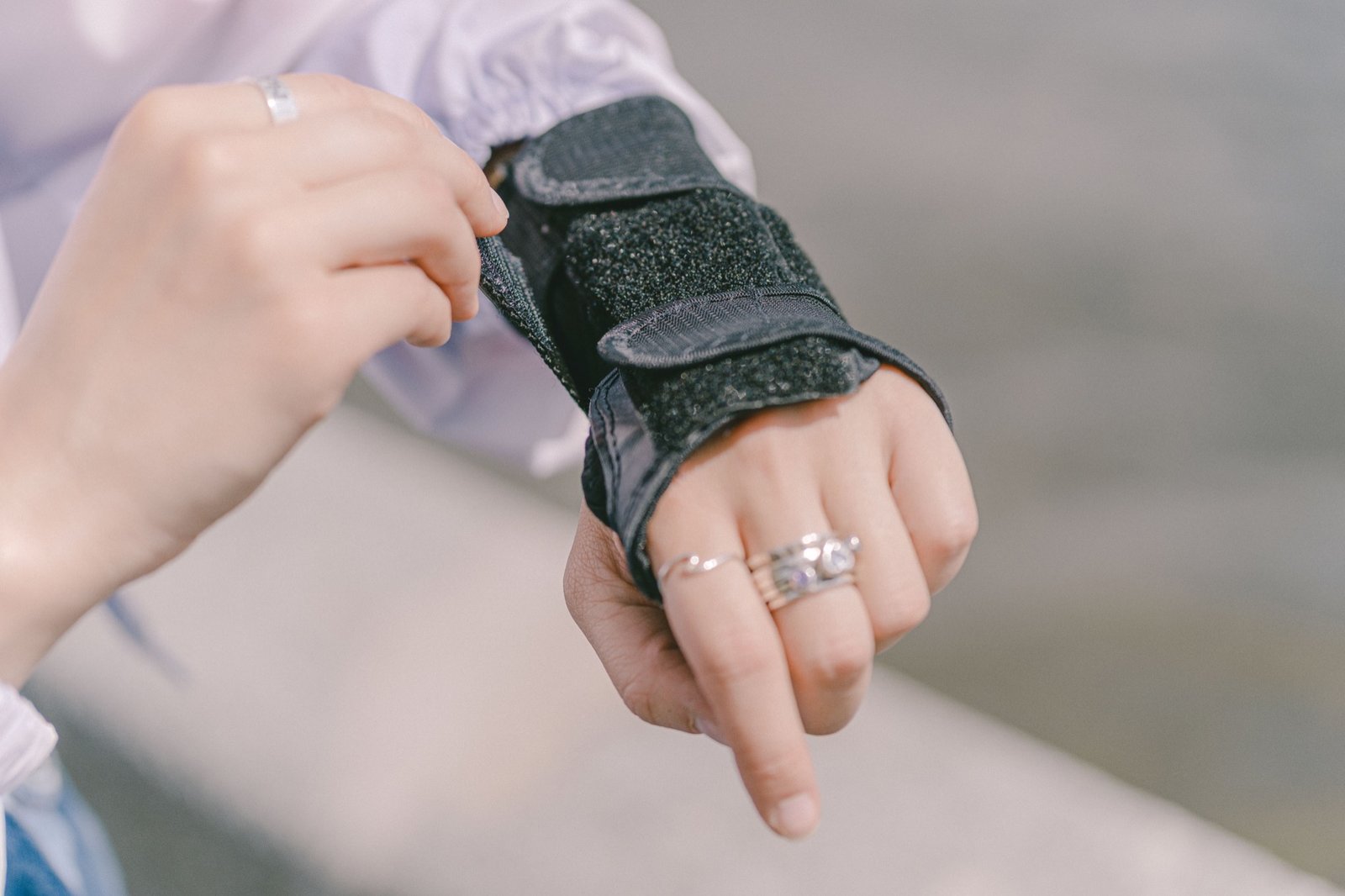
How to Use a Wrist Brace
For a sprain, wear the brace as recommended by a doctor, often continuously for the first days after injury and then during activities that stress the wrist as healing continues. For carpal tunnel symptoms, research has focused mainly on nighttime wear, since compliance with wearing a splint 24 hours a day is much lower than wearing it just at night, and night-only wear has still shown meaningful symptom improvement in studies. Adjust the straps snug enough to keep the splint in place without cutting off circulation, and remove it periodically to check skin and circulation, especially with extended wear.
Side Effects
Common Side Effects
Mild skin irritation or indentation marks from the straps are commonly reported, especially with prolonged wear. Some stiffness in the wrist after removing the brace, particularly after nighttime wear, is also common and usually resolves quickly with movement.
Serious Side Effects That Require Immediate Attention
Remove the brace and seek care if you notice numbness, tingling, or color changes in the fingers that worsen rather than improve, or persistent swelling below the brace, since these can indicate the brace is too tight and restricting circulation. See a doctor if wrist pain is severe, comes with visible deformity, or does not improve with a reasonable trial of bracing and rest, since a fracture or more significant injury needs its own evaluation.
Warnings and Precautions
There is no FDA boxed warning for a wrist brace, since it is a low-risk supportive device rather than a drug. The evidence for carpal tunnel specifically is real but modest: splinting reduces symptoms in many people with mild to moderate carpal tunnel syndrome, but at least one direct comparison found a corticosteroid injection outperformed a night splint at 6 weeks. A brace is a reasonable first step for many people, but it is not the most effective option in every case, and it will not resolve significant, longstanding nerve compression on its own.
| Condition | Brace Role | Evidence Strength |
|---|---|---|
| Wrist sprain | Immobilization to protect healing ligaments | Well-established, standard care |
| Mild to moderate carpal tunnel | Neutral positioning, mainly at night | Moderate; benefit shown but modest |
| Severe carpal tunnel | May reduce symptoms but less definitive | Other treatments often needed |
Who Should Be Cautious Using a Wrist Brace
Anyone with a suspected fracture, significant deformity, or an open wound at the wrist should see a doctor before relying on an OTC brace, since these need their own specific treatment. People with circulation problems in the hands should check with a doctor about safe wear time and strap tightness. If carpal tunnel symptoms are severe, involve muscle weakness, or do not improve after a few weeks of consistent bracing, see a doctor rather than continuing to self-treat indefinitely.
Care and Storage
Hand wash the fabric portion of the brace as needed per the manufacturer’s instructions, and avoid soaking the rigid splint stay if it is designed to be removable, checking the specific product’s care instructions. Since it is a device rather than a medication, it does not require the DEA Take Back disposal process; when it wears out, it can be discarded with regular household trash.

Helpful Resources
- ninds.nih.gov — NIH overview of carpal tunnel syndrome, causes, and treatment options.
- niams.nih.gov — NIH information on sprains, strains, and standard treatment approaches.
- ncbi.nlm.nih.gov — a published randomized trial comparing corticosteroid injection to night splinting for carpal tunnel syndrome.
Not sure whether a wrist brace, a doctor’s visit, or both make sense for your symptoms? South Fork Pharmacy in Moorefield can help you think it through.
Frequently Asked Questions
Should I wear the brace all day or just at night for carpal tunnel?
Most of the research supporting wrist splints for carpal tunnel has focused on nighttime wear, partly because people are far more likely to actually stick with wearing it consistently at night than 24 hours a day. Night-only wear has shown real symptom improvement in studies, so it is a reasonable and more sustainable starting point.
How long before I know if a wrist brace is helping my carpal tunnel symptoms?
Studies showing benefit generally measured results within a few weeks of consistent nightly use, so give it a genuine multi-week trial before deciding. If symptoms are not improving at all after several weeks of consistent wear, that is a reasonable point to talk to a doctor about other options.
Is it fine to wear a wrist brace during exercise or sports for a sprain?
It depends on the activity and how the specific injury is healing; a brace can provide helpful support during activity, but returning to sport too soon after a significant sprain, brace or no brace, can risk re-injury. Follow a doctor’s specific guidance on when and how to return to activity.
Can a wrist brace cure carpal tunnel syndrome permanently?
No. It manages symptoms by reducing pressure on the nerve, particularly overnight, but it does not address the underlying cause of nerve compression. Some people find splinting sufficient long-term, while others eventually need other treatments, including in some cases surgery, especially if symptoms are more severe or the compression is significant.
How tight should the brace be?
Snug enough to keep the splint in place and limit unwanted wrist movement, but not so tight that it causes numbness, tingling, or color changes in the fingers. If you notice any of those signs, loosen the straps immediately.
Is one brace style better than another for carpal tunnel?
Research comparing splint designs has found neutral-position splints show some advantage over cock-up (angled) splints for symptom relief specifically, though both styles have shown benefit overall. If you are not sure which design your specific brace uses, ask at the pharmacy where you purchase it.
Disclaimer: The information in this article is for educational purposes only and is not a substitute for professional medical advice, diagnosis, or treatment. Always seek the guidance of your physician, pharmacist, or other qualified health provider with any questions about a device, medication, or medical condition. Never disregard professional medical advice or delay seeking it because of something you have read here. If you think you may be experiencing a medical emergency, call 911 immediately. Product information changes regularly. Confirm current details with the manufacturer or your healthcare provider. South Fork Pharmacy, Moorefield, West Virginia.