
Quick Answer: Yes, in a real and measurable way. Cepacol Antibacterial Mouthwash uses cetylpyridinium chloride (CPC) 0.05%, an antiseptic shown in clinical studies to reduce the oral bacteria and volatile sulfur compounds behind bad breath. Its FDA-approved label indication is specifically for reducing plaque and gingivitis, not bad breath by name, but the bacteria it targets overlap heavily with the bacteria that produce bad breath in the first place.
Cepacol Mouthwash: Does It Actually Kill the Bacteria That Cause Bad Breath?
Bad breath that will not go away no matter how much gum you chew is frustrating, and it usually is not really a mint problem, it is a bacteria problem. That is what sends people to the mouthwash aisle looking for something that claims to actually kill germs rather than just cover up the smell for twenty minutes.
This article looks at what Cepacol’s active ingredient actually does, what the evidence says about bad breath specifically, and how to use it so it works the way it is designed to. South Fork Pharmacy in Moorefield can help you figure out whether persistent bad breath needs more than a mouthwash.
What Is Cepacol Mouthwash and What Is It Used For?
Cepacol Antibacterial Mouthwash contains cetylpyridinium chloride 0.05%, a quaternary ammonium antiseptic. Under the FDA’s OTC Drug Facts monograph, it is labeled as an antigingivitis and antiplaque rinse, meaning its approved indication is to help prevent and reduce plaque that leads to gingivitis and bleeding gums. It is not a controlled substance.
How Does Cepacol Mouthwash Work?
Cetylpyridinium chloride works by disrupting the outer membrane of bacterial cells, which kills a broad range of the bacteria living on your teeth, gums, and tongue. Bad breath is largely caused by certain oral bacteria producing volatile sulfur compounds as a byproduct of breaking down food debris and dead cells, especially on the back of the tongue. Because CPC kills many of the same bacteria responsible for both plaque and these odor compounds, clinical trials measuring volatile sulfur compounds directly have found real reductions in bad breath with regular CPC rinse use, even though that specific claim is not the formal wording on the Drug Facts label.
How to Take Cepacol Mouthwash
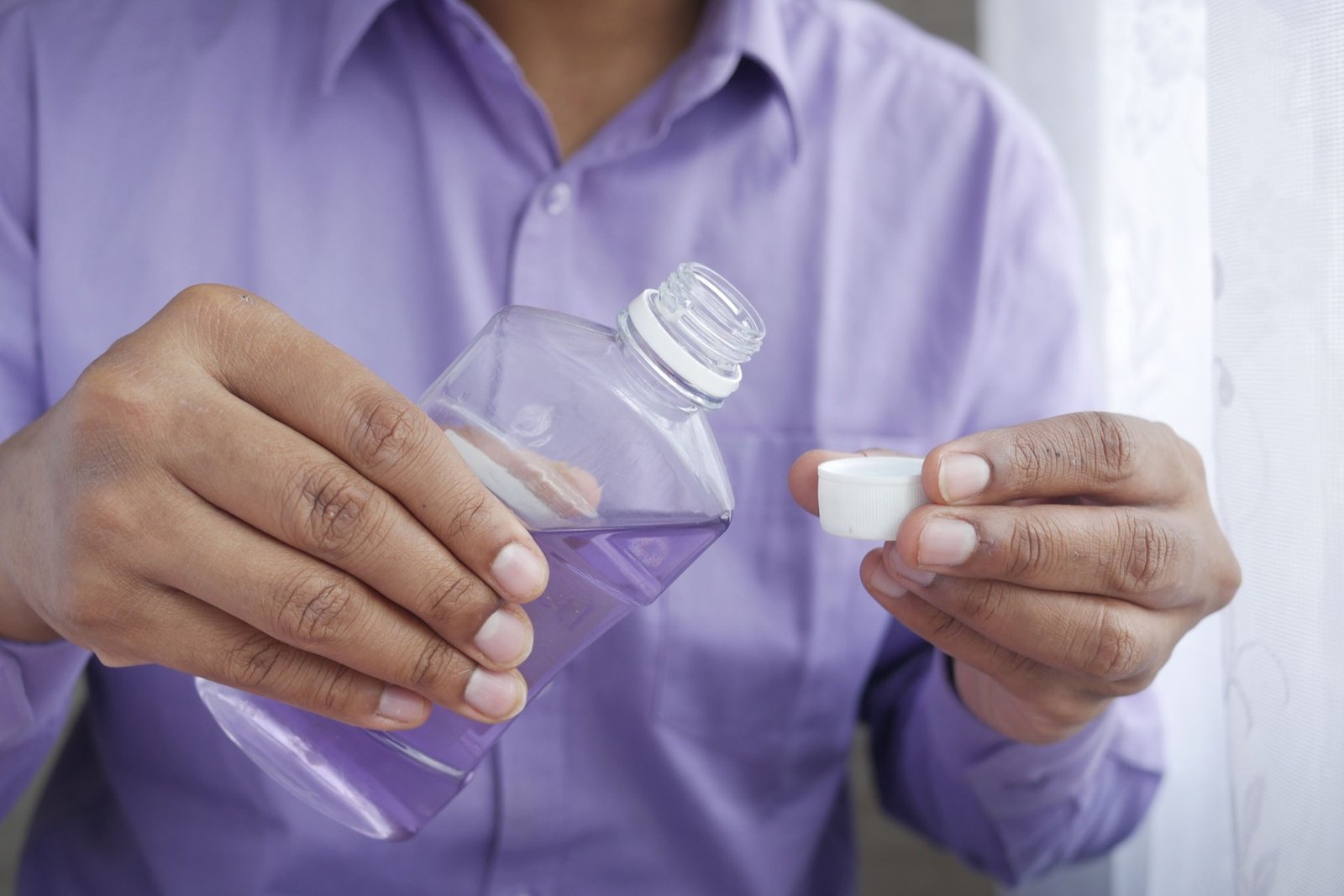
Adults and children 12 and older should swish 20 milliliters (about 4 teaspoons, or the marked line on the cap of most bottles) between the teeth for a full 30 seconds, twice a day, then spit it out; do not swallow it. Children 6 to 11 should use it only with adult supervision, and it should not be used at all in children under 6. Your pharmacist or dentist will determine the correct routine for your specific oral health situation.
Side Effects
Common Side Effects
A brief tingling or slightly bitter taste right after rinsing is common and expected. Some people notice temporary staining on teeth with regular long-term use of antiseptic mouthwashes, which is usually removable with a routine dental cleaning.
Serious Side Effects That Require Immediate Attention
Seek emergency care for signs of a severe allergic reaction, including facial swelling, hives, or difficulty breathing. If gingivitis, gum bleeding, or redness continues for more than 2 weeks despite regular use, or if you notice painful gums, pus, loose teeth, or teeth that seem to be developing new gaps, stop use and see a dentist, since these can be signs of periodontitis that a mouthwash alone will not fix.
Warnings and Precautions
There is no FDA boxed warning for Cepacol Mouthwash. Keep it out of reach of children under 6; if more than the amount used for rinsing is accidentally swallowed, contact Poison Control or get medical help right away. It is meant to be spit out, not swallowed, even in the amount used for a normal rinse. Check the specific product’s label before use, since some Cepacol formulations contain alcohol and others are alcohol-free, and an alcohol-free version may be preferable for children, people with a dry mouth, or anyone avoiding alcohol for personal or medical reasons.
| Step | Detail |
|---|---|
| Amount | 20 mL, about 4 teaspoons or one capful for most bottles |
| Swish time | Full 30 seconds |
| Frequency | Twice a day |
| Age limit | Not for children under 6; supervise ages 6 to 11 |
Who Should Not Use Cepacol Mouthwash
Children under 6 should not use it at all, since swallowing risk is the main concern at that age. Anyone with a known allergy to cetylpyridinium chloride or other listed ingredients should avoid it. If you have severe mouth sores, recent oral surgery, or ongoing gum disease beyond simple gingivitis, check with a dentist before adding an antiseptic rinse to your routine.
Storage and Disposal
Store Cepacol Mouthwash at room temperature, between 20 and 25 degrees Celsius (68 to 77 degrees Fahrenheit), protected from humidity, and keep it capped and out of reach of young children. Unused or expired mouthwash can generally go out with household trash; the DEA Take Back program at deadiversion.usdoj.gov/drug_disposal/takeback is also an option if you would rather not pour it out yourself.
Helpful Resources
- dailymed.nlm.nih.gov — the FDA-sourced Drug Facts label for Cepacol Antibacterial Mouthwash.
- nidcr.nih.gov — NIH information on gum disease and gingivitis.
- medlineplus.gov — NIH consumer information on bad breath and its common causes.
If mouthwash alone is not fixing persistent bad breath, stop by South Fork Pharmacy in Moorefield and a pharmacist can help you figure out whether it is time to see a dentist.
Frequently Asked Questions
If Cepacol kills bacteria, why does my breath still smell bad by afternoon?
Bacteria repopulate the mouth constantly throughout the day as you eat, drink, and breathe, so a morning rinse will not last indefinitely. Twice-daily use as labeled, along with brushing your tongue and staying hydrated, gives more consistent results than relying on a single rinse to last all day.
Is mouthwash a substitute for brushing and flossing?
No. Cepacol and similar antiseptic rinses are designed to work alongside brushing and flossing, not replace them, since only brushing and flossing physically remove plaque and food particles that a rinse cannot dislodge on its own. Skipping brushing in favor of mouthwash alone will not give you the same results.
Why does the label say not to swallow it if it is meant to go in my mouth?
The concentration of cetylpyridinium chloride and other ingredients is formulated for a brief rinse-and-spit use, not ingestion, and swallowing more than what is used for rinsing can cause stomach upset or other effects. If a child swallows a significant amount, contact Poison Control right away rather than waiting to see what happens.
Can I use Cepacol Mouthwash if I already use a prescription mouth rinse?
Ask your dentist or pharmacist before combining rinses, since some prescription mouth rinses, such as chlorhexidine, can interact with or reduce the effectiveness of certain over-the-counter ingredients if used too close together. Spacing them apart, or using only one, may be recommended.
Will Cepacol Mouthwash stain my teeth like some prescription rinses do?
Cetylpyridinium chloride has a lower staining tendency than chlorhexidine, a prescription antiseptic rinse well known for causing brown staining, but any long-term regular use of an antiseptic mouthwash can contribute to some surface staining over time. Routine dental cleanings typically remove this kind of staining.
How do I know if my bad breath is coming from my mouth or something else, like my stomach?
Most chronic bad breath does come from the mouth, tongue, or throat rather than the stomach, and improves with better oral hygiene and a rinse like Cepacol. If breath odor persists despite consistent brushing, flossing, and mouthwash use, or comes with other symptoms, it is worth seeing a dentist or doctor to rule out other causes.
Disclaimer: The information in this article is for educational purposes only and is not a substitute for professional medical advice, diagnosis, or treatment. Always seek the guidance of your physician, pharmacist, or other qualified health provider with any questions about a medication or medical condition. Never disregard professional medical advice or delay seeking it because of something you have read here. If you think you may be experiencing a medical emergency, call 911 immediately. Drug information changes regularly. Confirm current prescribing information with your pharmacist or physician. South Fork Pharmacy, Moorefield, West Virginia.